



Key takeaways:
- The smartest AI isn’t the chattiest; it’s the one that knows that it doesn't know.
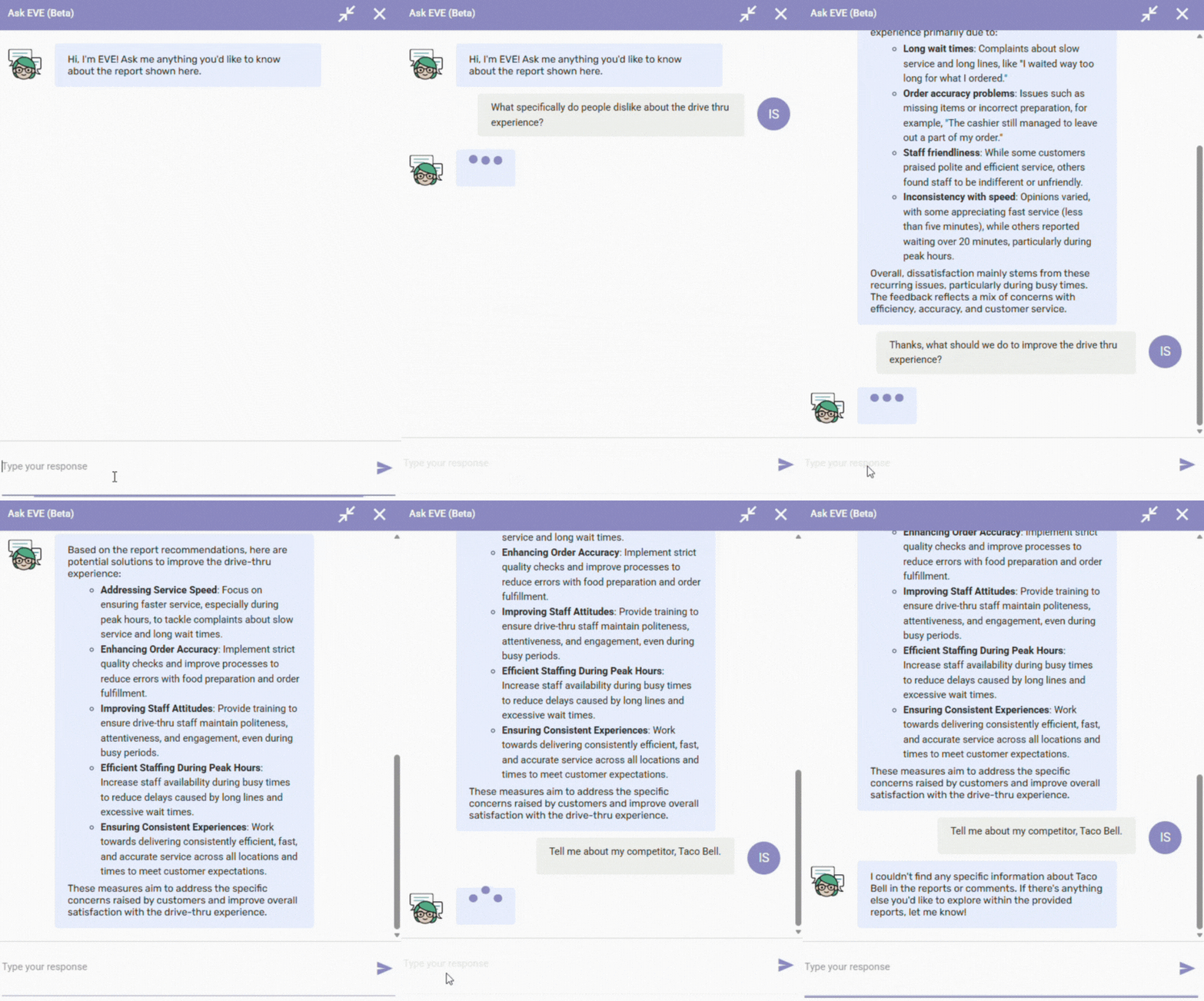
- Ask EVE, our qual AI copilot, gives instant answers grounded in validated human feedback - BUT says “I don’t know” when the data isn’t there.
- That honesty is the basis on which insights are trusted.
We’re about to launch Ask EVE, and I'm excited (very excited). I can’t stop chatting with EVE and asking her questions. She’s smart, fast, and helpful. But the best thing is that EVE doesn’t mansplain, she answers questions where she has the relevant data from your project and will say ‘I don’t know’ when she doesn’t. She will reasonably extrapolate to answer sensible questions, but not if you ask her something irrelevant or unreasonable, she’ll politely decline to make shit up.
Why “I don’t know” matters in AI-powered research
As researchers, we live and die by the trust clients place in our answers. They can get instant answers from many chatbots, but instant isn’t the same as accurate (or relevant, or realistic). We’re in the business of dependable, human centered insights. And yes, speed is important – but only if grounded in provable, validated, human feedback that was rigorously obtained and fit for purpose as a viable source for the question at hand. That's what primary research is all about.
We spent a year ensuring that EVE as your qual insights companion can admit her limitations, because AI hallucination is a real (non-trivial) problem. The info-sphere is filling up with AI slop written by brown-nosing chat companions (note: this article was not written by AI, but it did help with some jokes).
A quick example
Say you run a qual AI study on two product fillings - vanilla and chocolate. Chocolate wins. Great. Now you ask, “So… would caramel be a hit?” A generic chatbot might spin a confident story. EVE won’t. She’ll tell you to get more data or look elsewhere to assess caramel. No leaps. No slop. No hallucinations.
But don’t worry that we’ve lobotomized EVE – she is damn smart and can do some seriously impressive stuff including:
- Describe results and identify what people actually said in response to your questions, citing the proportion of people who mentioned each topic, and overlaying sentiment
- Extrapolate beyond the data but within the bounds of what is a reasonable hypothesis. For example, she can explore why chocolate was preferred over vanilla and which audiences liked it most, giving you clues on a new triple chocolate product
- Use Bayesian networks (aka impact maps) to explore complex and directional relationships to uncover hidden opportunities and share unexpected and useful findings with you – such as chocolate filling pairing up better with a crunchier base
So, EVE is both super smart but also trustworthy. If she doesn’t know the answer, she won’t fake it. She’ll say, “No idea.” Simple. Refreshing. Yum, all this choc talk is making me hungry.