


![Psychosocial Hazards at work: Australian benchmarks 2024 [report]](https://cms.humanlistening.com/uploads/charts_and_graphs_in_an_office_setting_1_1_1c879a68c4.webp)
Psychosocial Hazards at Work: Australian Benchmarks 2024 [Report]
Every workplace strives to create a safe and happy working environment where people prosper.
While physical risks are often prioritised, it’s crucial to understand the implications associated with psychosocial hazards. Recent legislative updates now necessitate that organisations proactively identify and manage psychosocial risks. The consequences include not only reputational risk, but fines and even criminal prosecution.
Our research
We surveyed 1,000 Australian employees in January 2024 this year to better understand the current state of employee wellbeing. Using our PS Safety Assessment, we explored three key elements of psychosocial hazards at work:
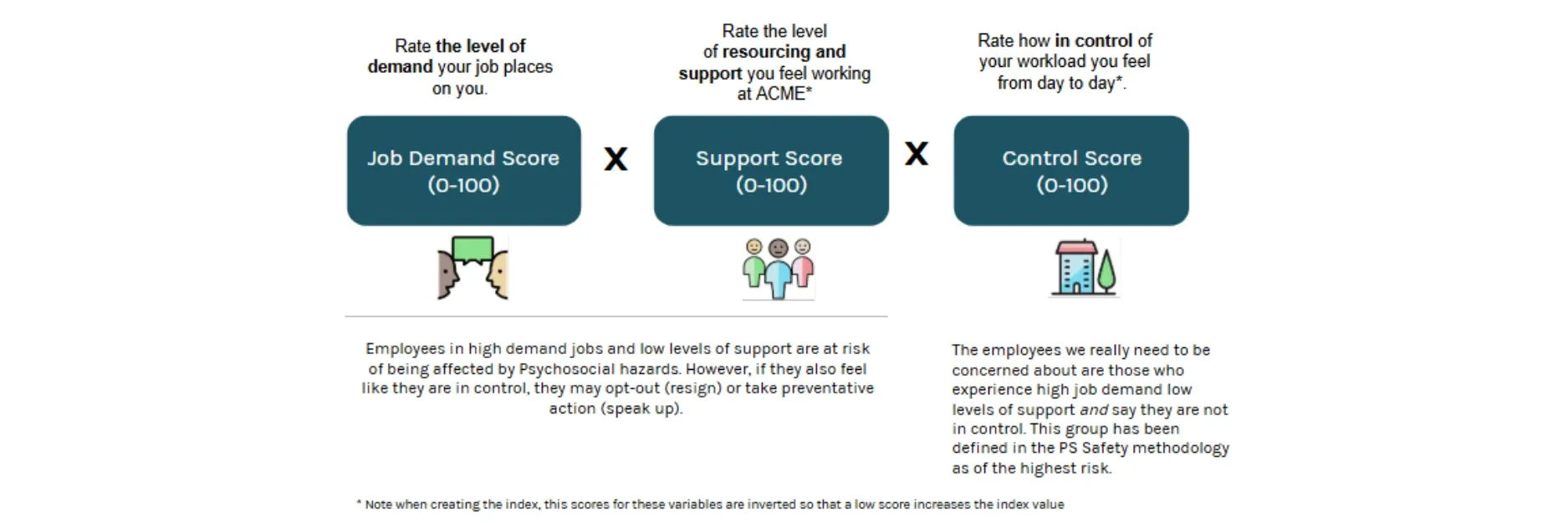
1). A scaled assessment (0-100) of job demand, available resources and sense of control
- We use this assessment to create a Vulnerability Index (VI) of job demand, level of support and their feeling of control. A high index score indicates that an employee is more vulnerable to hazards.
2). A direct assessment of inappropriate behaviours that create high risk
- Angry or hostile behaviour
- Verbal threats or intimidation including bullying
- Inappropriate comments or behaviour of a sexual nature
- Physical assault
- Discrimination of employees
- Shouting or swearing at employees
3). A chat with our Conversational AI companion, EVE, to explore specific workplace experiences across 14 areas
- Employee Treatment Hazards
- Job Experience Hazards
- Work Conditions Hazards
- Support Levels Hazards
- Bullying
- Harassment
- Low rewards and recognition
- Poor organisational justice
- Poor workplace relations and conflict
- High job demands
- Low job demands
- Lack of role clarity
- Poor environmental conditions
- Remote or isolated work
- Traumatic events
- Violence and aggression
- Poor change management
- inadequate support
Key findings
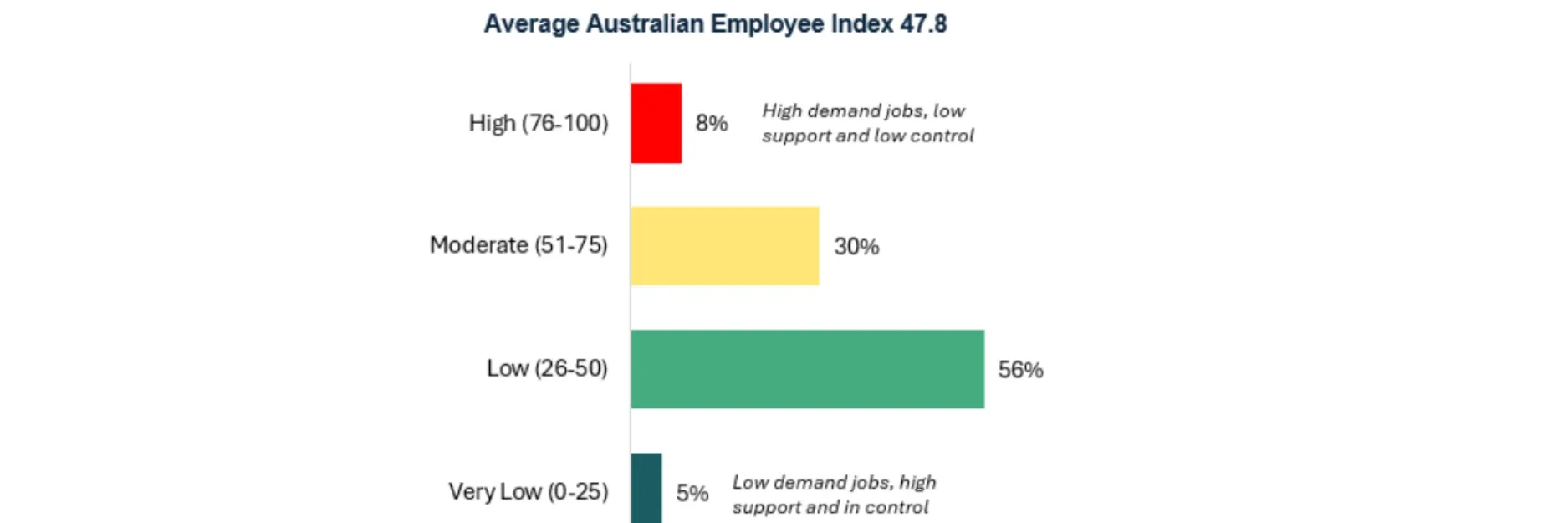
According to our results, nearly 40% of Australians are at a moderate to high risk of experiencing psychosocial hazards at work. This means that these people tend to have high demand jobs, with low levels of support and control - and are thus at higher risk of experiencing psychosocial hazards at work.
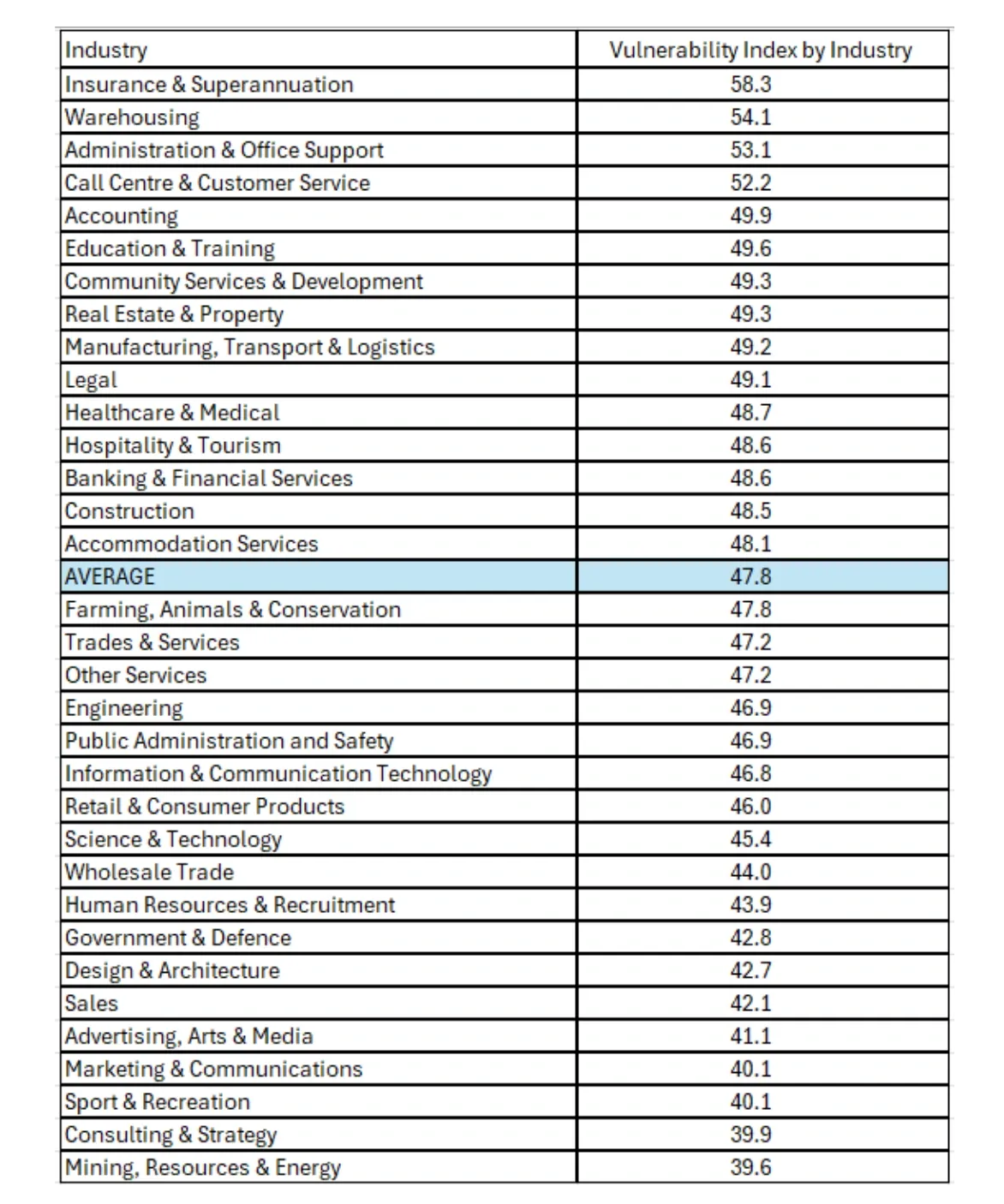
When we look at the Vulnerability Index split by industry, the insurance & superannuation, warehousing, and administration & office support industries have the highest level of vulnerability to psychosocial hazards.
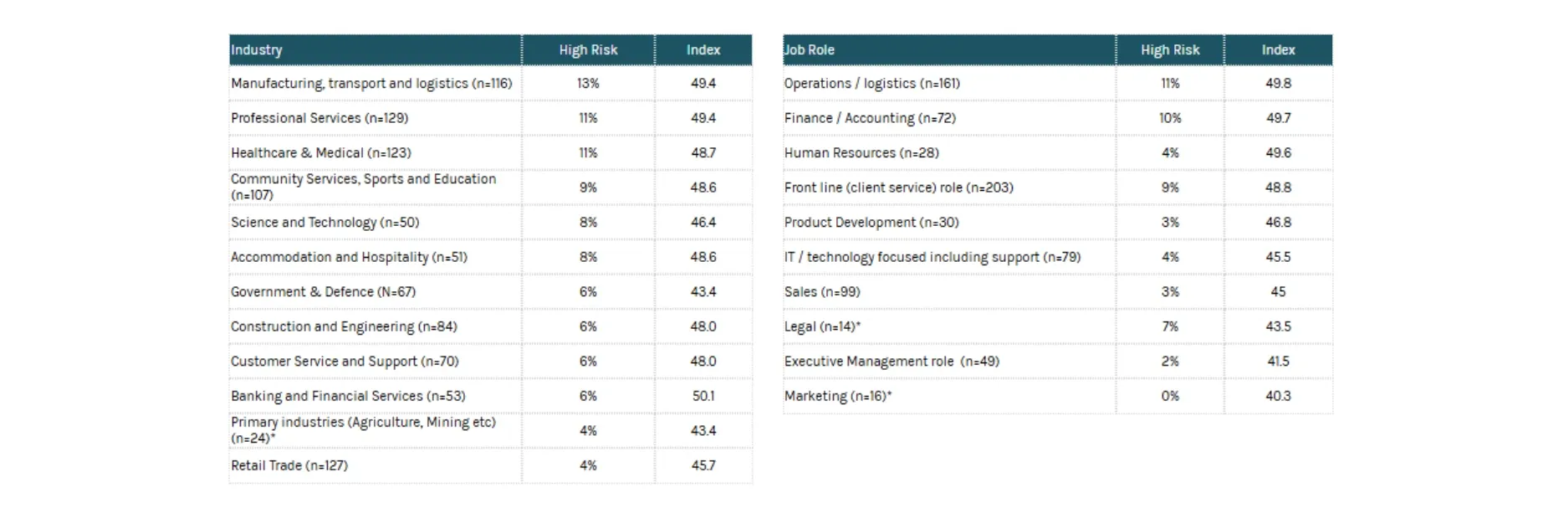
Once again, certain industries tend to experience higher levels of inappropriate behaviour.
When looking at specific inappropriate behaviours, some of the results are quite shocking. Nearly 1 in 3 experienced angry or hostile behaviour themselves and 1 in 4 have been shouted at or sworn at.
Have you seen or personally experienced any of the following behaviours at work in the last 12 months?
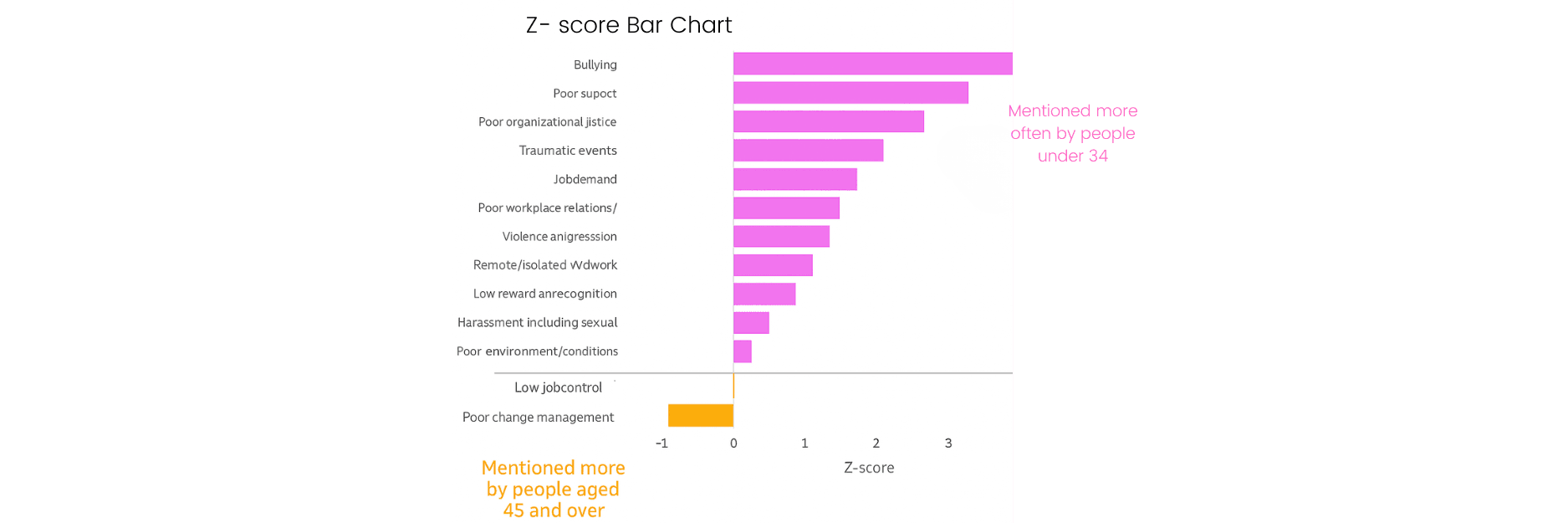
In analysing respondents chats with EVE, our Conversational AI assessment tool, we looked at the prevalence of 14 psychosocial topics. Results were as follows:
What next?
There is a clear need for organisations to address hazards in the workplace, both physical and psychosocial. What steps can you take to mitigate risk?
-
Assess your current state: it's critical to understand your overall level of psychosocial risk and how it compares to the Australian average.
-
Dig deeper to understand which hazards are most impacting your workforce.
-
Work with internal and external stakeholders to develop strategies to address these hazards.
Want to learn more?
Download our webinar where we will explore in more detail the current state of employee psychosocial safety in Australia, common psychosocial hazards and their potential effects on mental and physical health, and practical steps that businesses can take to mitigate these risks.
If you are an employee that is experiencing inappropriate behaviour in the workplace, we urge you to reach out to your EAP Provider, HR Team, or Beyond Blue.