


It’s widely accepted that a Qualitative AI conversation generates a lot more data than a standard open-ended question - 10-20x more in fact. But it’s not just about the amount of data you get, it’s about the quality and the richness of the conversation.
Traditional survey questions collect fixed, isolated data - such as a number, a rating, a single or multi response question, perhaps a grid rating. Open ended questions capture simple text feedback which tends to be perfunctory and top of mind. By contrast, our Qualitative AI companion, EVE, applies best practice interviewing techniques to elicit emotions, needs, tensions, motivations and context to feedback.
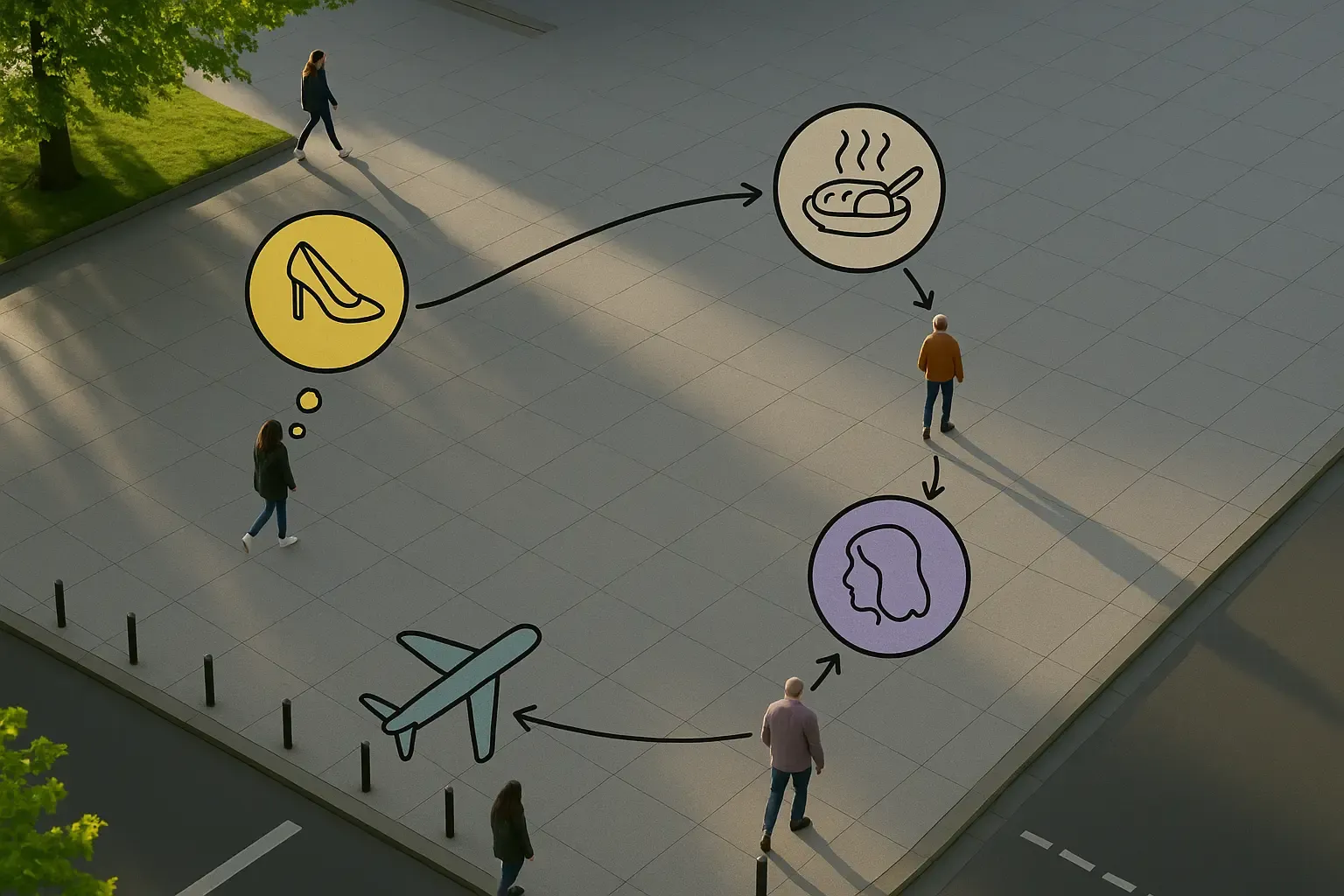
Human cognition is associative: one idea triggers another, which leads to clarification, elaboration, or reflection. Our Qual AI follows that pathway using adaptive probing, asking an appropriate next based on what the respondent just said. This mirrors real dialogue, helping the person articulate the deeper “why,” not just the surface level “what.”
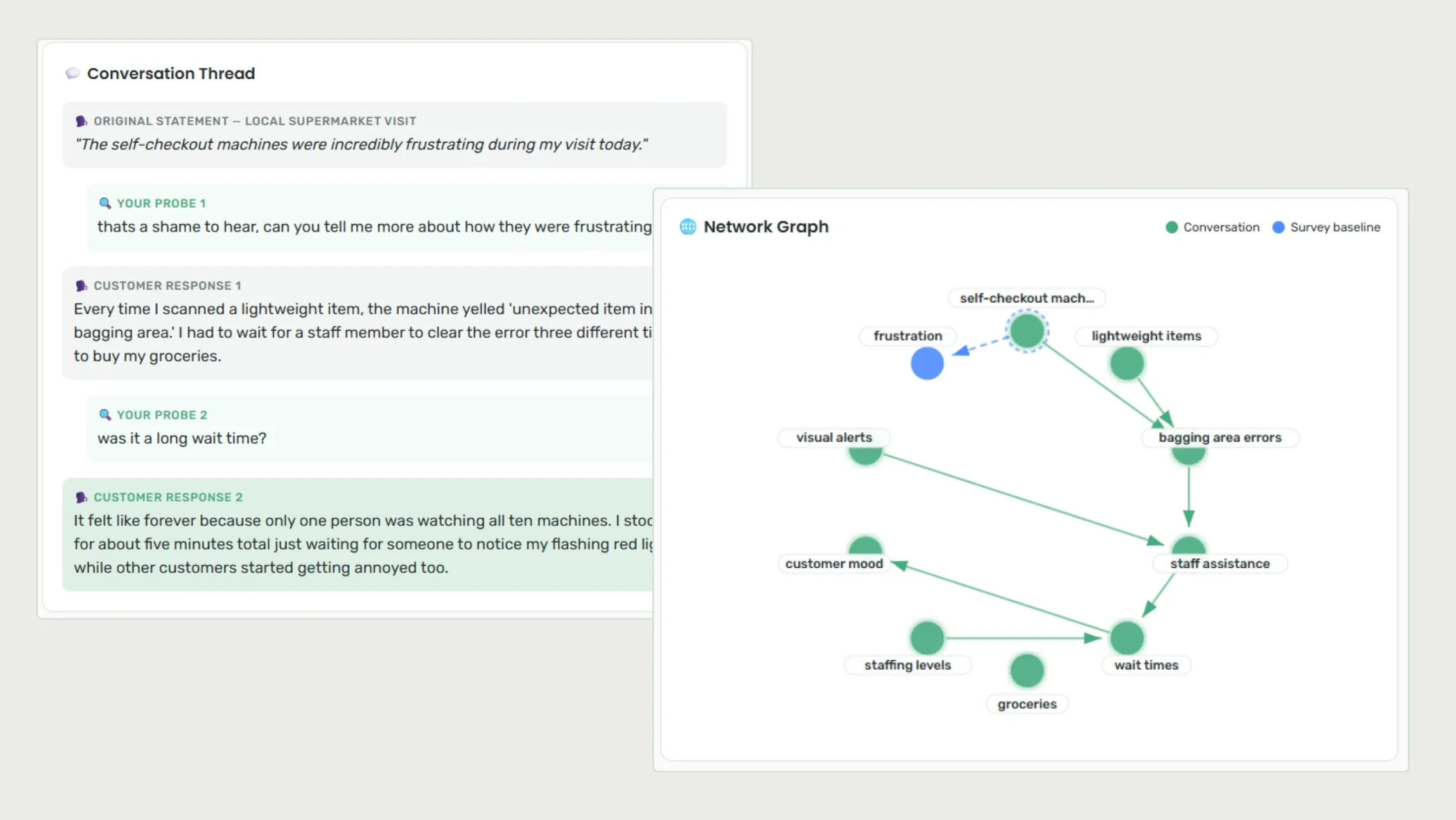
From an information network perspective, each conversational turn creates nodes (topics) and edges (connections between topics). A traditional survey data set is flat, structured, and pre-ordained by the researcher making decisions about what to ask based on their preconceptions. A minute of chatting with EVE, on the other hand, creates a dense mini network, multiple topics showing how they relate by cause and effect, chains of reasoning, emotional connections and mental associations. It’s like a window into the human mind and cognition – the place where consumers make real world decisions. More nodes (topics) + more links (relationships) = exponentially richer human dataset to feed into your AI systems. We actually created a mini game to demonstrate how this works - the better follow up questions you ask, the more nodes, and the higher your score!
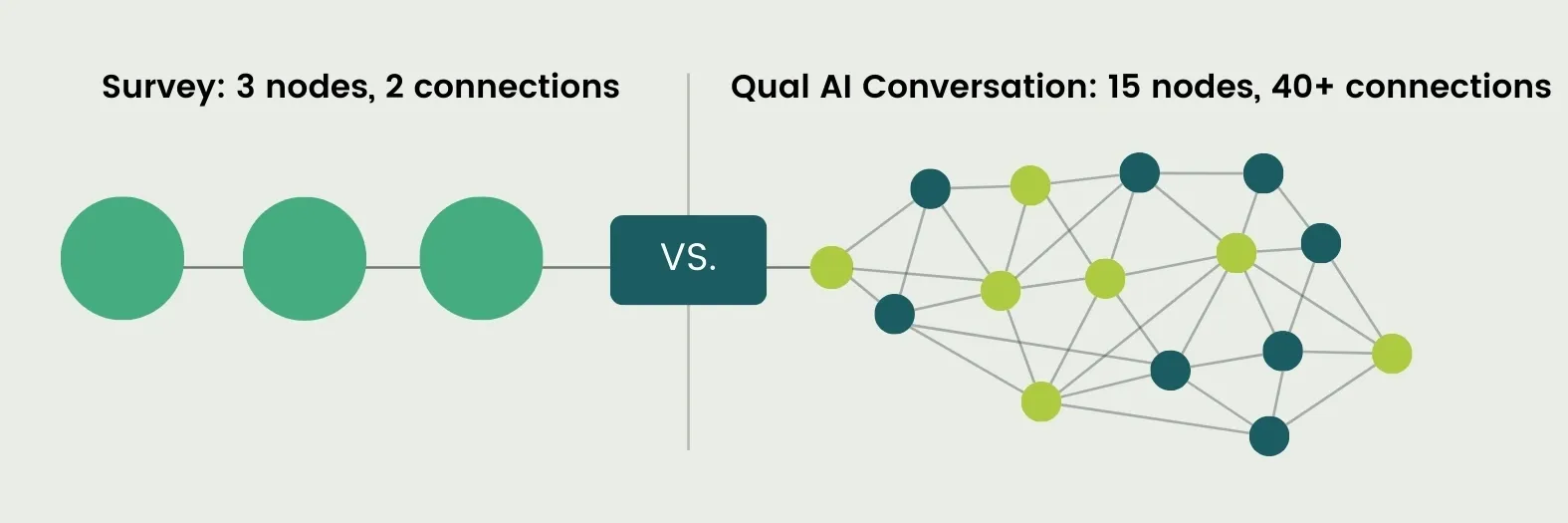
Conversational data sets are like rocket fuel for large language models - every extra word, idea, or emotional cue becomes a new node in the information network your model learns from. Instead of analyzing a thin layer of isolated comments, the AI ingests dense, interconnected webs of meaning, multiple topics, deeper explanations, and clearer emotional signals.
This massively increases your model’s ability to detect patterns, infer motivations, and generate sharper, more human insights. The richer the network, the more the AI can “push off” from each connection, accelerating its analytical power the way rocket fuel accelerates a spacecraft: more energy, more lift, more distance traveled with each ignition. In short, richer data doesn’t just improve your AI - it supercharges it