


Brands – our ephemeral commercial friends
In short: Brands still matter, but the way they are built and won has changed. Rising media costs, the influencer economy and e-commerce have shifted power away from big manufacturers and made buyers more transactional. Traditional brand trackers capture only part of this, so researchers now need to listen to customers in their own words, at scale, to understand why a brand wins or loses them.
Brands have always been front and center for all things research and what researchers do. Organizations continue to spend huge sums of money creating them, building them and managing them. As a researcher, I've always found working on brand research to be interesting and challenging, because it requires all the skills we learn across our careers and draws on left and right brain thinking. Given there is so much focus on AI in what people (including me) are writing lately, I thought it was a good time to switch gears and instead focus on something that has been around a long time but is still critical to the way the economy and industry operates: brands.
Brands are important, will always be important, but what they are and how they work has changed. Let's explore what, how and why things have changed and the implications for researchers and their clients.
What are brands and how are they researched?
Ask ten experts what a brand is and you will get ten different answers. Most will talk about a logo, maybe a 'promise', a 'trust mark' or possibly a set of values the product enshrines. Some might mention the strapline, a position or the brand personality. Brands are of course all those things and more. My preferred definition, imperfect but useful in practice, is what is purchased beyond the generic tangible product sold. This neatly captures the idea that the brand is the intangibles you value over tangible product attributes and that investment in brand is to create these intangibles. For researchers, how we define brands matters, and it's part of what a client buys into when they choose their agency for doing brand research. The agency's ethos or beliefs about brands drive their choice of research methods and the types of questions they ask about brands in qual and quant research. It shapes how they go about measuring brand equity, how they determine brand health, advise on the potential for brand stretch and identify opportunities to create a new brand. Tools and frameworks like the Keller Model, Conversion Analysis and Brand Maps (Correspondence Analysis) are widely used across all research agencies. The holy grail, though, has always been to go beyond asking overt questions to really understanding what lies beneath the surface.
Here is a thought experiment – I'm going to imagine I have a friend 'Bob' (Bob is my usual thought experiment mental crash test dummy). You ask me to describe Bob. I might say 'Bob is tall and he has brown hair. He smiles a lot, he is sporty and enjoys a beer'. If you ask me what Bob believes in, I might say 'Bob believes in a fair go, he values honesty and supports his mates'. Now, if you ask me, 'Imagine you and Bob are together, how does he make you feel?', I might respond, 'He makes me feel supported, comfortable, ready for some fun but a little edgy because Bob sometimes says things that are a bit inappropriate.' The point is, how I ask about Bob tells me something different about him – same guy, different dimensions in how I can understand him as a person. I can even ask about how Bob affects me as a third party, which perhaps yields subtle but vital information about Bob and the way I envisage all aspects of him in my mental model of him (my 'homunculus' of Bob). To be clear, if it wasn't obvious, Bob could just as well be a brand as a person. He could be a brand of beer. Do I want Bob, this brand of beer, to be my friend despite his flaws?
Given brands are built through associations with people, images, words, music, sounds and even concepts, it is not surprising that your typical brand manager, a good one, is borderline obsessed with brand management – basically, who they let their brand hang out with and what they let it do. Small mistakes can ruin a brand, just ask Nike (more on that later). Most importantly, brands are authentic – they do what they promise. If Bob started listening to Sufjan Stevens and TVOTR, riding a fixie and taking an active interest in live theater, he wouldn't be Bob and the change would be jarring. As it happens, I do value all those things at times (i.e. in a modality), but I already have a friend, Fred, who wears a smock and makes artisanal coffee.
It's a good analogy though – brands are (often) big and commercially driven corporates trying to make friends with us by concocting a personality and presence we appreciate. We build associations and mental shortcuts that come to represent the brand and then guide our behavior. How prominently the brand sits in my mind then becomes critical in understanding my purchase behaviors and choices at the store. As a researcher, this is why I believe first-to-mind awareness and unprompted associations are both critical to really understanding brands and their power.
Three forces reshaping brands: media cost, influencers, and e-commerce Media fragmentation around the turn of the millennium irrevocably changed how brands are built and managed. The advent of social media around 10 years later changed them again. Today, brands are being remolded by LLMs and agential AI. Change is the only constant. Fundamentally, there were three forces at play, and by considering each, we can understand what happened:
- Increasing cost of reaching your target audience through mass media and improved attribution and ROI measurement from digital channels;
- The rise of trust and endorsement, which is wrapped up in the idea of transferred identification and the influencer economy; and
- Last but not least, e-commerce and online purchasing, which made long-tail merchandising possible.
A bit to unpack there, so let's Just Do It!
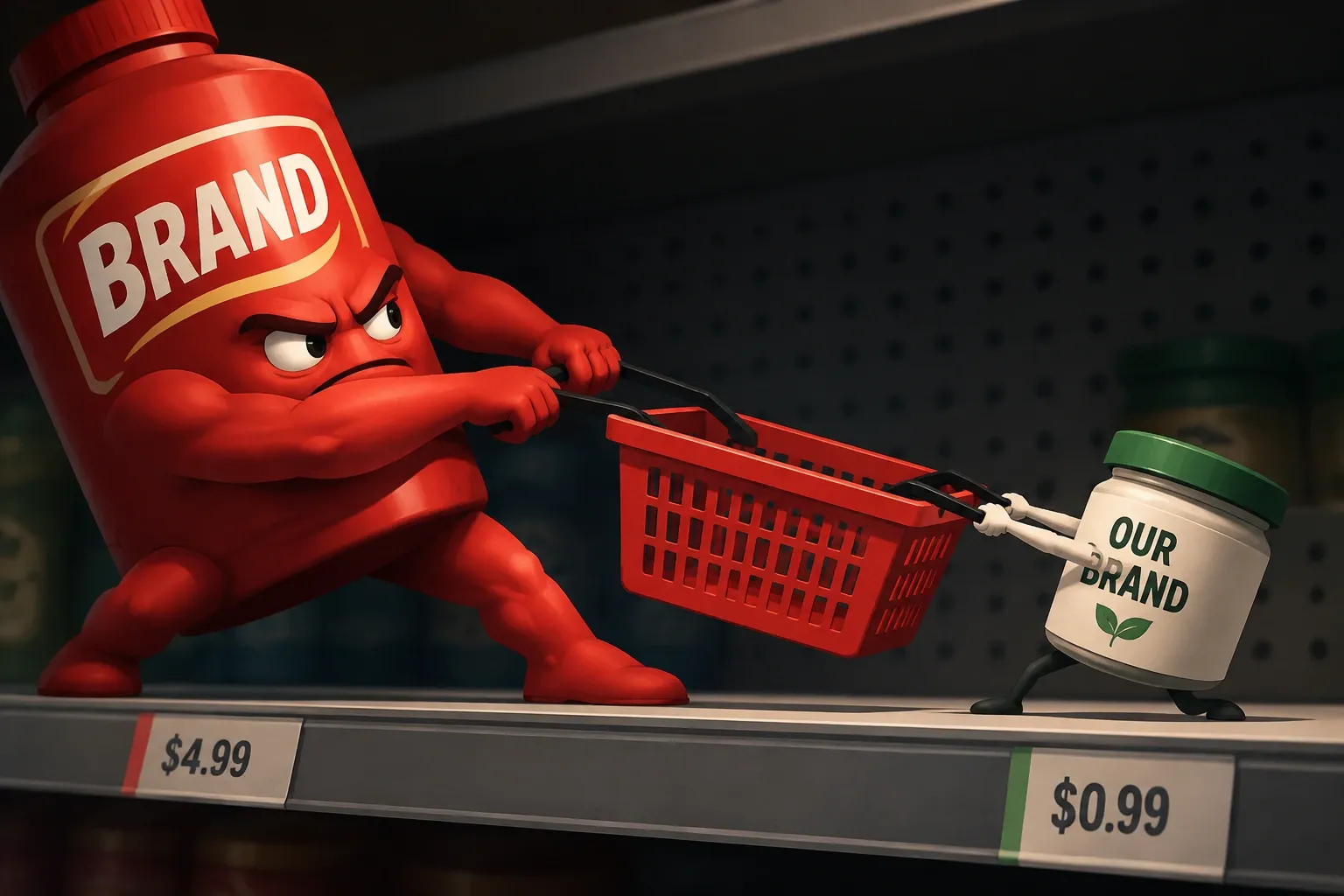
Let's start with cost, attribution and ROI. Before the internet and social platforms, the game was to spend big on 'above the line' (ATL) advertising, build awareness and create a pull-through to the point of purchase, likely also investing in 'below the line' (BTL) activity such as trade promotions or point-of-sale marketing. In retail, a good category to illustrate this, perhaps the best, the battleline is the shelf. The retailer merch team negotiate facings with the product owner and the weapon of choice is consumer brand desire (I think I have been reading too many high romantasy novels lately). Power brands like P&G, Kraft and Coke invested billions in creative development and media advertising because it created consumer demand for their favorite brands at the point of sale. The calculus was to spend $100m on advertising to generate shelf space and $200m worth of sales. Pretty clear logic there and for many decades it worked. In this view, advertising is not so much about driving purchase as it is about gaining channel placement, which is where the purchase happens. A subtle but important difference!
This was a fun time for all concerned – as a creative, advertiser, media planner, marketing manager and researcher. I'll resist the urge to cite 'Mad Men' but it really was like that at times. I once worked on a study for Sheaffer Pens that took me all the way across Asia, talking to fashion conscious consumers in Singapore, Taipei, Shanghai, Tokyo, Kuala Lumpur and Seoul. I remember sitting in a focus group in Tokyo, listening through a simultaneous translator to a Japanese woman dressed to the nines deifying her Gucci handbag as an object of desire.
In this halcyon era, brands sought to find space in the mind of the consumer, through creative execution coupled with media planning to produce reach and frequency. Brand managers needed researchers to listen to a sample of their consumers and measure and track their success or carefully test new ideas for supporting their brands. As an aside, the best book you can read on this was authored by an Australian research doyen – it's called 'Advertising and the Mind of the Consumer', by Max Sutherland. Recommended reading even today. Of course, I write this as if it is in the past, but it's the same game, although the rules have changed and the strategies to create brands are different.
I worked on the Sheaffer study around 2000, but even then, the signs were clear that the internet was changing the world of brands, in ways both obvious and non-obvious. Specifically, the ability to reach a demographically defined mass audience through TV and broadcast media was undermined by media fragmentation. Concurrently, the ability to target consumers through digital advertising, to pinpoint your audience behaviorally and demographically, changed the whole dynamic. First, media spend could be more efficient and justified because a cookie could trace the exposure to the purchase. Second, it was harder to find lots of consumers in one place (e.g. watching Friends or Seinfeld) because consumers could select from hundreds of streamed programs. Then with social media, we could track and place advertising using context and behavior (just don't mention Cambridge Analytica).
So, back on the supermarket shelf, the situation was changing, with power shifting from the manufacturers to the retailers – why? Because consumers realized that for many products, they could buy generics, and because it was harder for the merchandisers to get their products on the shelf because media fragmentation meant they could not generate consumer desire for their products in the way they used to.
Obviously, this wasn't terminal for brands because we still see a heap of branded products on shelves and in every category. But its impact can be measured simply by scanning the shelf and comparing the ratio of generic (private label) products to branded products.
Retailers like Aldi inverted the whole model by making home brand generics the default, recognizing that a whole class of consumers shop on pragmatic factors, especially price, and are quite selective in their preference for premium brands. In other categories such as luxury goods, we've recently seen an increasing shift toward exclusivity over mass affluence, and toward experiences over products as people seek new ways to signal their elite status.
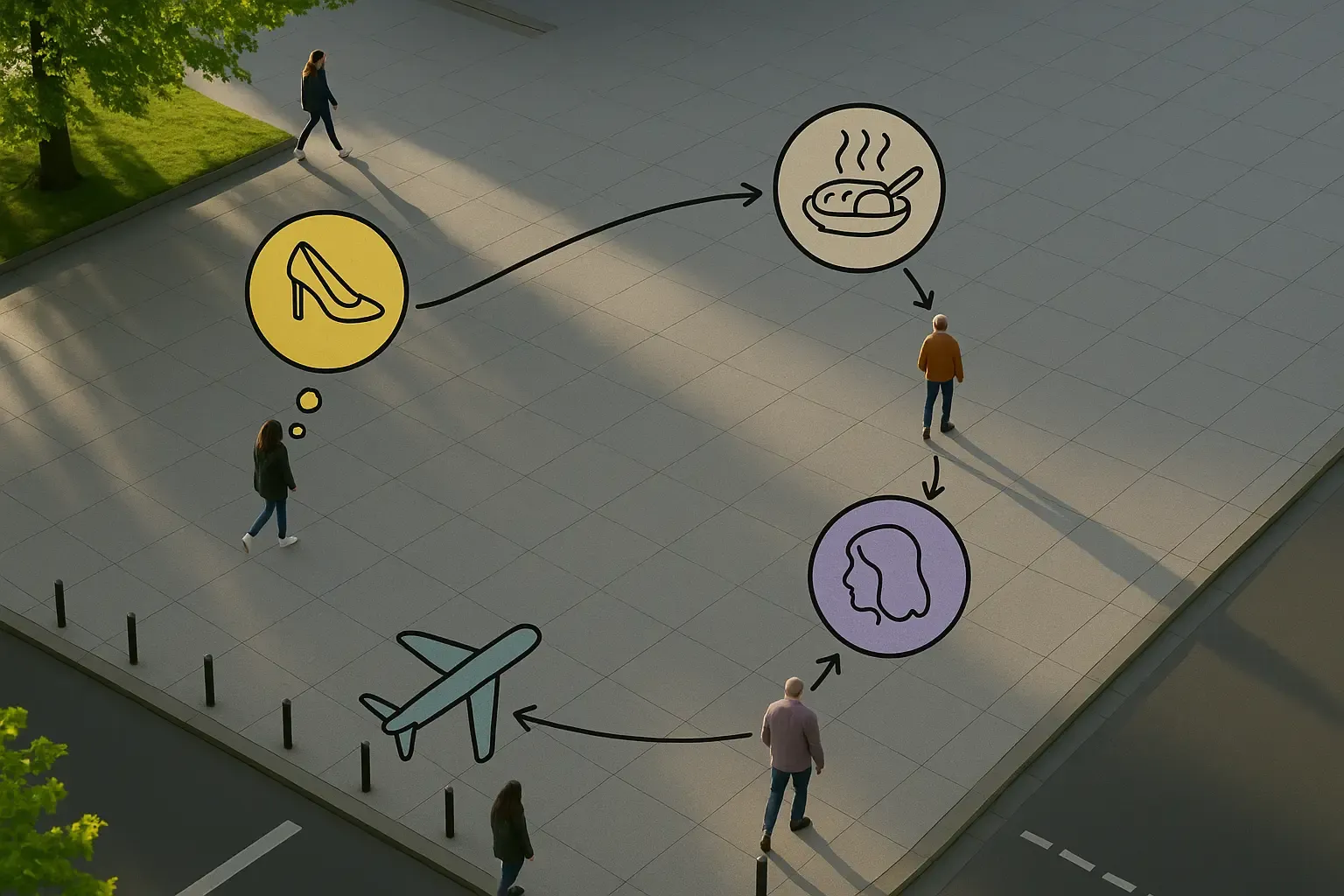
This also led to the second force, which is the rise of influencers. Rather than buying the brand alone, consumers started buying the personality that endorsed the brand. As the algorithms created silos in our minds, we started to become more tribal. Ironically, with more choice than ever in music, video and other media, we sought identification through the cult of personality and tribalism. Meanwhile, people also became brand skeptical because they could easily research brand experiences by reading user reviews and in some cases, buy direct from the brand rather than a retailer. What can Nike's shift to direct sales teach us about brand power? The last factor to consider is the impact of the internet on purchase channels. On this, we will use Nike as a cautionary tale. Ouchy ouch ouch. Nike had (still has) one of the strongest brands on earth. It must have spent many billions on its brand over the years through advertising and sponsorships, the result being a global 'power brand', instantly recognizable with the swoosh, Just Do It and tight linkages with sporting legends and heroes. But, as you may have read given its wide coverage, a few years ago, Nike pulled back from many retail partners to sell direct, creating a vacuum for hitherto obscure niche brands to fill gaps on the shelf. Nike's sales have subsequently crashed, the share price has plummeted and the CEO left in 2024. Other mistakes have been made; you can read about them Other mistakes have been made; you can read about them (here) but really this tale neatly wraps up a lot of the forces outlined including more transactional consumers, weakened share of mind, susceptibility to novelty seeking and consumers' identification with endorsers as their brand guides as well as loss of power on the shelf. Nike thought its brand was strong enough to go direct and to wade into socially hot issues, but it wasn't. Maybe the lesson, if there is one, is that knowing the power of your brand, and the limits of that power, as well as its capacity to pull the buyers into the channel is what should be guiding your channel strategy.
Why are traditional brand trackers no longer enough?
This new world for brands is both a blessing and a curse. It creates new opportunities for brand building based on niche and highly targeted audiences. It allows more players, but it also makes it much harder to control a narrative as influencers and social sharing play a greater role in advocacy. There are more options for media advertising, consumers are more skeptical but also listen to different voices. Research starts earlier in the path to purchase and price is a more important lever for many consumers, while those with high disposable incomes seek new ways to show their wealth and status.
You can now target your audience, target the time and buying stage and place your ad close to the decision point. The rise of the influencer means we need to understand how the brands relate to potential ambassadors and their shared values and connotations. We also have to accept it is harder to win loyalty and it is more easily lost. Like everything in life, trends move faster and astute brand managers need to be masters of many disciplines and have their fingers on the pulse of consumer trends and what is coming down the pipeline. In this world, I would say the paid, earned, shared and owned model (PESO) still has great relevance, and if you are not familiar with it, it’s definitely worth a read.
The end result of these changes, I believe, has been to degrade the value of brands, which is perhaps controversial. People are much more transactional now and the truly wealthy and mass affluent are seeking to find their exclusivity through occasions and experiences that are not mass produced but ephemeral and time bound, captured in a moment on a mobile phone, then shared with your mates to generate jealousy. This is not to say brands are not still critical, nor that premium product brands don't exist, but rather that the game and field of play have changed beyond recognition compared to the turn of the century. You have to be much smarter now, and more sophisticated, not necessarily a bigger spender. You have to play 4D chess to beat the competition and actually create a brand of value through investing in the brand. Your brand is more vulnerable and the risks to manage are greater. The retail marketing mix is much more integrated and requires coherent co-management. How has the path to purchase changed for brands?
Four things have changed in the brand purchase journey:
- The purchase journey has changed; it is complex and winding, but the decision starts well before the point of purchase
- Brand operates at all levels on the journey – reach and repetition remain pivotal concepts but they are only one of a more complex set of parameters in brand building
- The purchase is more transactional, but brand positioning and resonance still matter
- As a researcher, if I were helping a client compete in this category, I would need to understand this in detail, at every level, and be able to work with the data to understand why my brand is working for me, where it isn't and what I can do to leverage it
Most trackers still measure the promise, awareness, consideration and image statements on a five-point scale. They tell you how people rate you in the abstract. This can still be useful, but only up to a point in a much more complex environment. The funnel says people move through a sequence of gates. Aware, consider, buy, repurchase. In reality, it can be messy, circuitous and contradictory. People drop out and return over time and they can be swayed at any time. Consumers switch because of pull factors ('ooh, look at this') and push factors ('I've had enough of this') or simply by falling out of love with the brand. When you let people express themselves in their own words, you can hear this. You can detect the moment the brand won them and why it won them. You can also pinpoint the moment it lost them, which you can't get from a Likert scale.
Also, we live in a more volatile world than ever before. To understand the brand and its performance, you need to understand context and look at things from the mindset of your consumer while they operate in their category.
What continues to excite me as a career researcher, and also wearing my other hat as a product designer, is that we can now use qualitative methods at scale, coupled with advanced text analytics, to properly understand the brand beyond overtly asking people to describe it or rate it. For example, we can infer sentiment about a brand and explore emotionality toward it using Plutchik's model. We can also build up a picture of implicit brand associations using projective techniques coupled with Bayesian analysis – how the brand 'appears' to people when they think about it. These inferred insights, beyond direct question asking, are a better way to understand the brand's value in decision making, and ultimately to measure and track its health against competitors.
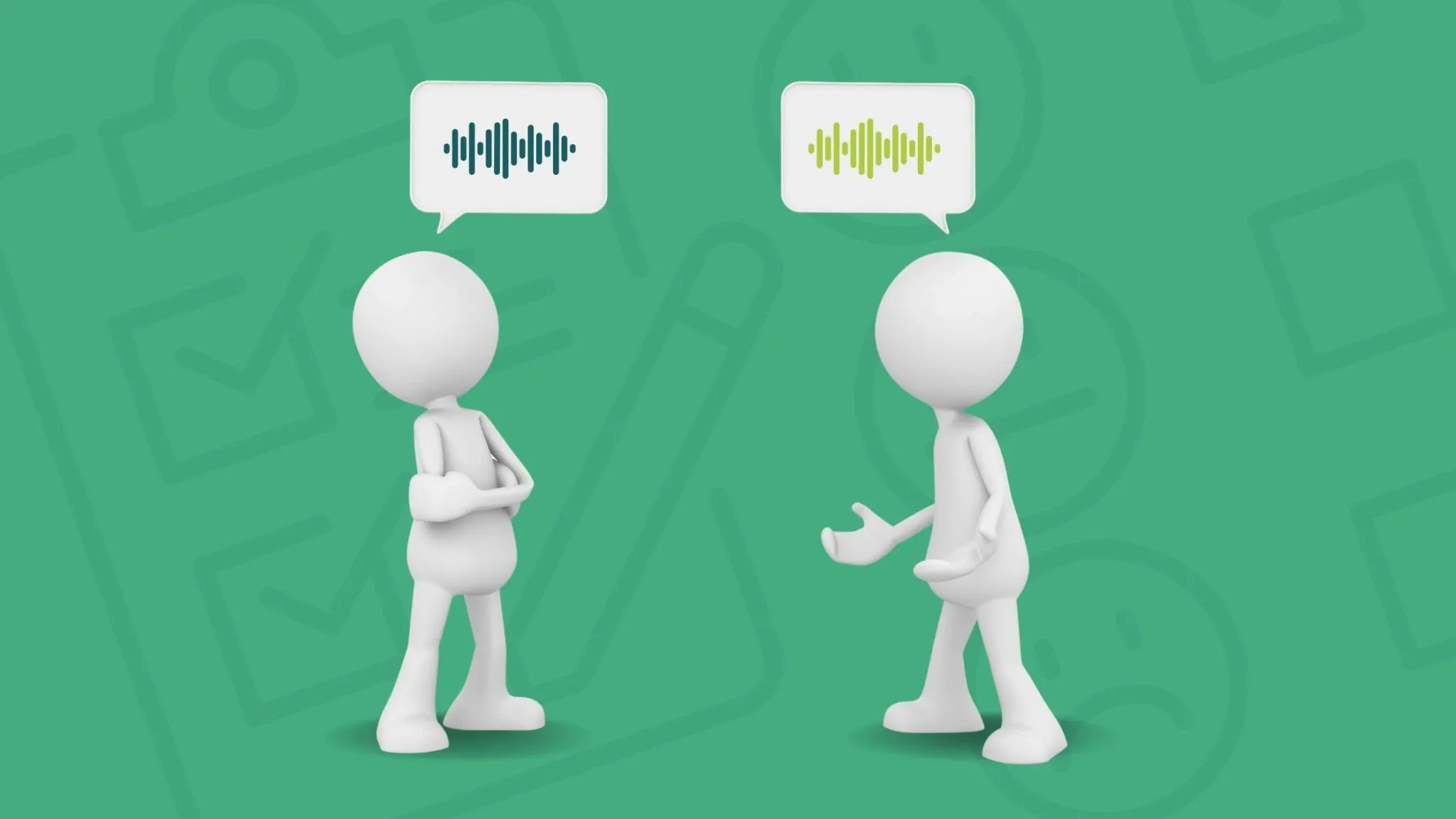
This is where qual AI (i.e. EVE in HumanListening) really becomes the superstar. Rather than tracking straight lines with rigid structured agree and disagree ratings, we can structure conversations to listen to: • What matters to the consumer in their world • How they perceive brands: their language, emotionality and sentiment • How they buy, and the tangible and intangible factors guiding their choice
We can unpack real conversations with thousands of people and scientifically demonstrate what's going on through the purchase funnel. The AI can probe, follow up and explore motivations and needs that reveal much more about brands and the consumers who buy them. We can read every word and find the patterns that reveal the 'aha' moments. We can achieve the depth and humanness of qual at the scale of a quant tracker. That gets us closer than ever to the thing brands have always struggled to pin down. The meaning. The essence people carry around in their heads, told in their own words.
With our new text auto report time series analysis, we can track shifts and trends in brand thoughts and feelings over time and pin them down to specific causes and reasons, whether they are in the control of the brand manager or outside of it and purely competitive or environmental.
Last but not least, we can also bridge the gap between the brand promise and brand experience, which is something that matters more than ever. Shit reviews and negative ratings kill brands. It is also where great products become great brands through advocacy. In the past, it was enough to promise but now, you have to deliver, which really is a good thing.
Postscript – stop reading now if you hate reading about AI.
OK - so I have to touch on this. Imagine in the world of MCP that an agent gets to know you and then uses its beliefs about you to buy for you. How do we research brands in that world? How does the agent intermediate the decision process and who is controlling it? Does the AI begin to shape the consumers' views and preferences and if so, who is pulling the levers? As researchers, should we still be asking the human questions or the agent. These are all very real and relevant questions – immediate and important to brands and to researchers. Time will tell.